For my final Blog post I wanted to consider the livable world, and what that has meant to each of the characters from our semester. The Left Hand of Darkness gives us an opportunity for considering this topic in the character of Genly. Genly's livable world seems to have shifted the more time he spends on Winter and with asexual "people". In the beginning, he struggled to fit his existing notions of sexuality and gender roles onto the people of Winter. Yet at the end of the novel, when looking on the faces of the companions he left behind, he thinks they look alien. The women are too feminine and the men more masculine than he is prepared for. This change in perception has also caused a change in what he can live with, and I think it would be very hard for us to imagine that Genly will ever leave Winter again. The "normal" conventions of man and woman are strange for him now, and understanding humans as people is the only lens he can use to view the world.
But by looking at just the change in his livable world and not the circumstances that created it, we can see connections between him and many of the other characters that we have explored. In this regard, I see an amazing similarity between the characters of Genly, Edna, and Yank. In the beginning of each respective story all three exist within a space that protects their livable world. For Yank this is the boiler room of the ship, for Edna the pleasant lifestyle of the New Orleans elite, and Genly living in a traditional gender setting. This life is disrupted by something or someone changing how they view the world; Mildred for Yank, Robert for Edna, and Winter for Genly. After this change happens, they each can no longer see their old life as fulfilling, and try desperately to adapt to the change each has experienced. Only Genly is successful in this endeavor as Edna drowns herself being unable to find happiness, and Yank is killed by a gorilla because he does not really understand anything except that boiler room. All three make attempts at changing after the disruption, but actually being able to do so seems nearly impossible.
There is also a connection between characters who simply do not fit in with the world around them, and attempt to create their own pocket of a "livable world". The characters of Daisy and Miss Brill are great examples of this notion. Miss Brill lives within her own fantasy where she considers the park as a stage of actors, all equally important to the overall production. This pocket of imagination that she creates for herself gives her a sense of belonging and importance, that the real world does not acknowledge. Daisy does not rely on imagination, but instead ignores the social conventions of the world around her and lives a promiscuous lifestyle looked down on by the rest of the elite. She does not care what is proper and correct, and exists within her own bubble of ignoring rumors, gossip, and proper interactions. Both of these characters have their world's shattered, and it seems do not even attempt to change along with it. Miss Brill hears a young couple discussing her unimportance, and Daisy is killed of fever. Here we see that escaping the real world into a livable space of your own does not always have positive results.
There are no real discussion questions, but what do you guys think of my connections between the characters? Did I group them according to how you would? Did I forget a character that belongs, or group someone who doesn't? Whatdayathink?
Wednesday, April 30, 2014

Taoism, Harmony and The Left Hand of Darkness
As we've discussed in class, Le Guin incorporates a large number of binary oppositions and Genly is forced to come to terms with each internal and external challenge he encounters. These binaries, such as light and dark and male and female, are addressed in Taoist philosophy, ideas from which Le Guin frequently utilizes throughout the course of her text.
Taoist principles are based in balance and harmony, living as one with Tao, or “the way.” Many people associate Taoism with the yin yang symbol, or the Taijitu, a swirl of black and white with a white or black dot inside, showing light and dark as one. In the yin yang and in Taoism, yin is considered passive and feminine and yang is considered active or aggressive and masculine. Although in many societies, especially contemporary American society, male and female are seen as separate and oftentimes unequal. It is considered out of the normative if a woman acts in a traditionally "masculine" way, like using power tools or grilling out, or if a man carefully chooses what he looks like each day or keeps a clean house and is considered “wimpy” or “feminine.”
Taoist principles toss these notions aside. When looking at the Taijitu symbol, it becomes clear that the large white section, representing yang, has dark, yin, within. It is the same with the large black section, containing a small white circle, representing yang. In Taoist philosophy, one is neither masculine nor feminine, but a mix of both, and it is beautiful.
Le Guin throws these principles at Genli Ai during his time on Winter. On the planet, the people are both male and female, and Genly does not trust his traveling partner, Estroven, because of his dual genders. In Genly’s society, males and females are separate genders and are seen as different types of people. He struggles for the majority of the book as he attempts to classify Estroven as either male or female, and he states, “I had been afraid to give (acceptance). I had not wanted to give my trust, my friendship to a man who was a woman, to a woman who was a man” (267). Genly cannot get past his structured binary categorization in order to see that Estroven was willing to sacrifice everything he had— his political power, his family, and even his life— so Genly could complete his mission.
Soon, that same night, Genly realizes that he does not need to have everything in common with Estroven in order for the two to be friends. In fact, it was their differences rather than their similarities that drew them together, another example of yin and yang, two opposites coming together to form a whole friendship.
Even on a broader spectrum, the joining of light and dark weaves its way through the text. When Genly and Estroven move across the ice, Genly is bewildered by the absence of darkness and shadow, as well as the absence of light within the dark snowstorms. Estroven recites a poem about light and dark, explaining that the two “(lie) together like lovers in kemmer… /like the end and the way” (252). Later, Estroven states that “we need the shadows in order to walk” (286). Without the two, it is not possible to know one, much like the Taijitu suggests; light is part of dark and in darkness there is light.
Likewise, Genly is able to accept Estroven’s masculinity and femininity as a part of him, a part that defines the whole. Once Genly believes that Estroven’s femininity does not compromise him as a human being, but instead enhance his humanity, he is able to give him the entirety of his friendship (267). The yin and yang and Taoism is again echoed here, underlining the necessity for both masculine and feminine qualities in humanity. As LeGuin says in the introduction, “the future, in fiction, is a metaphor” (xix). This novel is not a “what would happen if” novel, but a “is” novel. People are both masculine and feminine, and perhaps Le Guin is suggesting that in order to make a world livable for any gender, people must know one to define the other and accept both in order to understand gender as a whole. Taoism supports this theory, especially with the Taijitu symbol, emphasizing two halves, mixed, to create a whole, existing in harmony with each other.
Monday, April 21, 2014
The Return of Estraven
We stowed the wheels,
uncapped the sledge-runners, put on our skis, and took off – down, north,
onward, into that silent vastness of fire and ice that said in enormous letters
of black and white DEATH, DEATH, written right across a continent. The sledge
pulled like a feather, and we laughed with joy.
Our suspicions about the Orgota are entirely justified when
we learn that Genly is locked up in a frigid steel cage and hauled off to a
“Farm.” Although he was betrayed by Obsle, Shusgis, and the Sarf, Genly does
maintain that there is a certain homely kindness among the people: they are
“uncomplaining, unhopeful,” he mentions. Indeed, the silent compassion of his
fellow “convicts” is what keeps him sane. He arrives at the farm in an almost
dreamlike stupor. He is ostracized by the community, nicknamed “The Pervert,”
and continuously injected with kemmer-supressing drugs although he is of a
different species. His fortune almost entirely vanishes until Estraven
conveniently forges a few papers and rescues Genly, capitalizing upon the
Orgota’s inattention to detail and outright laziness.
When Genly finally recovers from his chemical daze and
persistent illness, him and Estraven decide that they must brave the northern
glaciers in order to avoid being detected. Realizing that he was wrong to
mistrust Estraven, Genly finally apologizes to his companion. The two are now
wanted by opposing factions. As Genly Ai flees his fate, it seems as though
Estraven is slowly making his way towards the inevitable terminus of his.
A few discussion questions:
1) The Pulefen Farm is aituated in a cold, dreary
environment. The workers there are not fatally strained, Genly mentions, and
the labor is not as taxing as he thought it would be (i.e., the workers don’t
drop dead from working, but from disease). In addition, the workers are
subjected to drug trials and experimentation. Would it be mistaken to possibly
draw a comparison between Pulefen Farm and a Russian gulag? How substantial is
the “Cold War” allegory in this science-fiction novel?
2) Has Genly made the right decision in trusting Estraven?
Was Estraven right all along, or is there some ulterior motive behind his
actions?
3) Can either side – Karhide or Orgoreyn – be trusted? Is
Genly essentially preaching to the wrong choir? (The Foretellers would say no,
but, as readers, we’re allowed to disagree.)
Monday, April 14, 2014
Gender and Gethenians
All of chapter seven discusses gender and basically nothing else. It's like a plotless Michael Bay movie that doesn't end and has a ton of sexual tension between the male and female leads. Except the characters are both male and female? or neither? or both? Or magically only gendered conveniently around the female menstrual cycle (I see what you did there, Le Guin).
Since the Gethenians cycle from somer to kemmer, gender gets thrown around. Every couple of weeks the Gethenians enter kemmer and spice up their love lives by becoming either male or female. Some could be both a mother and a father, and sometimes Gethenians can "vow kemmering" and enter in what we think of as marriage.
This is all relevant because it's so foreign to us outside of Le Guin's world. In The Left Hand of Darkness, Le Guin's characters can cross genders, allowing women to be politicians, guards, soldiers, or other traditional male roles. This also opens up opportunities for men to be caregivers, bakers, and yes, even landladies. This swapping of "traditional" gender roles gives the reader a look inside a diverse, unisex community and explains a lot of the confusion Ai experiences during his time on Gethen. He attempts to categorize humans into "male" and "female" roles, even though this is impossible. The Gethenians switch genders more frequently than I brush my hair. Ai constantly tries to sort the people as if they were humans, assigning gendered pronouns to the people outside of kemmer.
The lack of gender also provides a very safe space for the people. It is not only inappropriate for gender discrimination to exist on Gethen, it is impossible. Because there are no such things as "gender roles," there is no way something could be labeled as "manly" or "feminine." There is no gender identity crisis (surprisingly) and there is no concern about having a child with your sibling (weird) or being both a father and/or a mother to various children.
Le Guin uses Ai as an example, showing how people in contemporary society (or the late 60's) view gender roles and gender construction. Ai is an outsider, someone who will never fit in because of his specific views on sexuality and gender. He constantly puts people into boxes and Le Guin begins to come through and show a society where people share roles and function equally and the only real problem is the dude trying to put walls where there shouldn't be any barriers. Although this chapter was pretty boring, it showed the reader a lot about the society, Ai, and Le Guin's feelings about sexuality and its interaction with gender and gender roles.
Since the Gethenians cycle from somer to kemmer, gender gets thrown around. Every couple of weeks the Gethenians enter kemmer and spice up their love lives by becoming either male or female. Some could be both a mother and a father, and sometimes Gethenians can "vow kemmering" and enter in what we think of as marriage.
This is all relevant because it's so foreign to us outside of Le Guin's world. In The Left Hand of Darkness, Le Guin's characters can cross genders, allowing women to be politicians, guards, soldiers, or other traditional male roles. This also opens up opportunities for men to be caregivers, bakers, and yes, even landladies. This swapping of "traditional" gender roles gives the reader a look inside a diverse, unisex community and explains a lot of the confusion Ai experiences during his time on Gethen. He attempts to categorize humans into "male" and "female" roles, even though this is impossible. The Gethenians switch genders more frequently than I brush my hair. Ai constantly tries to sort the people as if they were humans, assigning gendered pronouns to the people outside of kemmer.
The lack of gender also provides a very safe space for the people. It is not only inappropriate for gender discrimination to exist on Gethen, it is impossible. Because there are no such things as "gender roles," there is no way something could be labeled as "manly" or "feminine." There is no gender identity crisis (surprisingly) and there is no concern about having a child with your sibling (weird) or being both a father and/or a mother to various children.
Le Guin uses Ai as an example, showing how people in contemporary society (or the late 60's) view gender roles and gender construction. Ai is an outsider, someone who will never fit in because of his specific views on sexuality and gender. He constantly puts people into boxes and Le Guin begins to come through and show a society where people share roles and function equally and the only real problem is the dude trying to put walls where there shouldn't be any barriers. Although this chapter was pretty boring, it showed the reader a lot about the society, Ai, and Le Guin's feelings about sexuality and its interaction with gender and gender roles.
Map of Gethen

I was having trouble picturing where Genly Ai was traveling at certain points in The Left Hand of Darkness, so I decided to upload a map. Sure, it's no map of Middle Earth, but I think it should be just as helpful.
Nusuth,
J.C.
Wednesday, April 9, 2014
The right question?
After the failure of his political mission, Genly Ai
makes a pilgrimage to a "Fastness" in order to observe a ceremony of
divination. He would not "be pursuing this curiously intangible cult
into its secret places at all" did he not desire an answer to a
question. This question does not seem to be one of personal import: it
is formulated with the detachment of an anthropologist on the search for
cultural "fact": "What are the Foretellers, and what do they actually
do?"
There's a way of posing a question to a person (or book or
culture or object) that situates the questioner himself beyond the
access of a question. The way lies in the posing rather than in the
question itself. "What are the Foretellers, and what do they actually
do?" If this question issues from the "objectivity" of a scientistic
anthropology, its answer, while it may very well represent an access of
usable knowledge, will not challenge the presuppositions of the
questioner: it will not pose a question in return.
It's
important, I think, that Ai is not himself an investigator, though he is
reliant on their accumulated knowledge and might replicate the wording
of at least one of their questions: and he presents his experience not
as "findings" but as a story. Part of the fun of reading a work set in a
different time and place -- be it "Left Hand of Darkness" or "Things
Fall Apart" -- is finding your bearings in an unfamiliar culture: at its
first appearance, an untranslated bit of lingo passes by and leaves a
question in the memory: thirty pages later the same term will appear in a
context that brings it closer to comprehensibility, and the reader
feels a pleasure not unlike that felt by an Investigator, perhaps, at
ascribing a "function" to an erstwhile inscrutable practice. Put enough
of these insights together and you have a respectiable dossier to send
back to the home office.
To what extent, for Ai, is investigation linked to classification? And are our pleasures, as readers, also classificatory?
From
what we learn of it, the Ekumen seems an eminently "reasonable"
institution: one that, in corroroboration of its name, is fundamentally
ecumenical -- difference among the planets, one imagines, is not
eradicated: but the derivation of all of their inhabitants from the
originary planet of Hain emphasizes that there is something "common" to
the humanity of them all. In at least one respect -- their sexuality --
the inhabitants of Winter differ from common humanity: might not the
adepts of Handdara also represent a spiritual "deviation"? They prize a
"singular 'ignorance'" and suggests the presence, according to Ai, of
"an old darkness, passive, anarchic, silent" that lies at the foundation of
Karhidian society: and, if Ai is correct in his assessment, is this
"darkness" really compatible with the almost technocratic efficiency of
the Ekumen, with its network of "information exchange"?
Ai
(and the reader) is warned of "the perfect uselessness of knowing the
answer to the wrong question": what, then, is the right sort of
question? According to the Haddara? According to Genly Ai? According to us, as readers in an unfamiliar land?
Monday, April 7, 2014
The Soldier Returns with Mr. Freud
In the final chapter of West’s Return of the Soldier, we finally get the long awaited scene of
analysis by Dr. Anderson, the man who it is believed will be able to finally
cure Chris of his “illness”, or at least aid in helping them to understand it
more fully. I found it interesting that despite the buildup, West shows very
little of Chris being cured other than the discussion of him being outside with
the doctor and then the short scene at the end of the novel in which he is
coming back to the house and looks “every inch a soldier”, a line clearly
indicating that Chris is back to the man he once was, having not only recalled
the horrors of war that he experienced, but more importantly the unhappiness he
felt while living in the house (56).
And Margaret makes the comment to the doctor that
psychoanalysis and the treatment that the doctor provides will not truly cure
Chris of what ails him, as although it will cure his amnesia, it will only
return him to the state of unhappiness that the amnesia allowed him to escape
from, it will make him “ordinary” rather than happy. The pair seem to have an understanding
that bringing people back to “normality” is what is expected of society and of psychiatrists
rather than being something that is always what it best then for the patient or
the person afflicted and it is this that Margaret accepts finally when she does
take the items to Chris so that his memory could be brought back despite his
resistance.
Also find it interesting that there is a literal form of the repressed existing in the house, waiting to be returned to the memories of all living there will just a single turn of the key, so clearly Chris is not the only one grappling with these ideas.
Discussion Questions:
1. Do you agree with the decision made on the part of
Margaret to bring Chris’ memories back? Was she truly obligated to do so, sacrificing her and Chris's potential happiness for his "cure", or
should she rather have kept him as is as he was happy?
2. Ties into the first question in regards to the treatment,
do you think that West should have written more about the actual treatment of
Chris, or is this unimportant? Psychoanalysis is something West herself later
downplays as a part of the novel, however she does spend quite a bit of time
going over the tenets of psychoanalysis through Dr. Anderson.
3. Is returning as “every inch a soldier” truly a cure? Or
rather is there a cure at all that can be had, or at least one had so simply?
Although Kitty seems to believe so, I find that I am not quite so sure.
Sunday, April 6, 2014
Manifestos Manifestos, where art thou, Manifestos?
Hi folks!
We'll look at a few of these together on Tuesday, but just in case you're thinking about your final project now--AS YOU SHOULD BE!!--here are some examples to look at of manifestos!
We'll look at a few of these together on Tuesday, but just in case you're thinking about your final project now--AS YOU SHOULD BE!!--here are some examples to look at of manifestos!


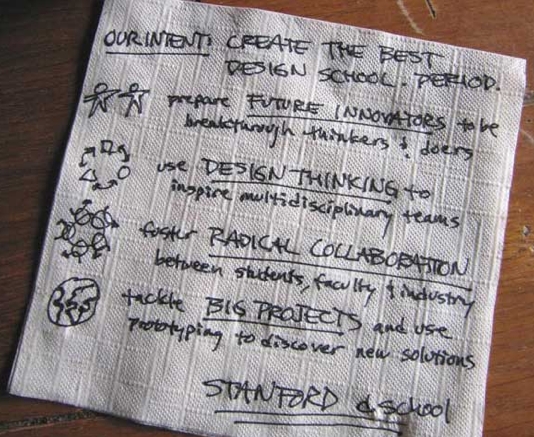
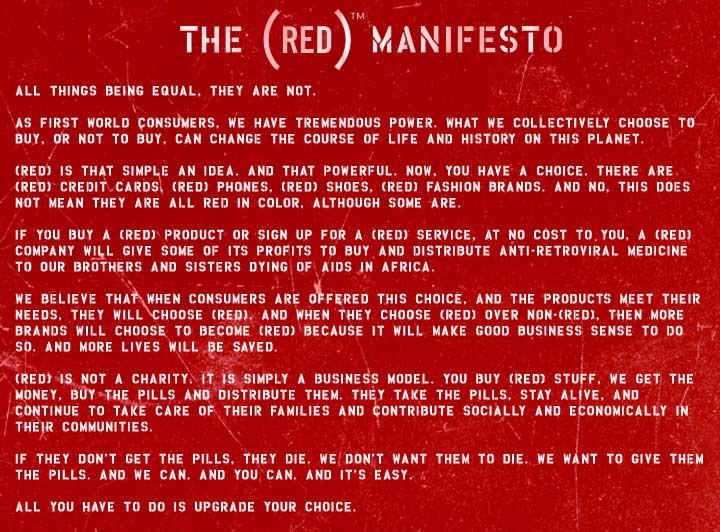
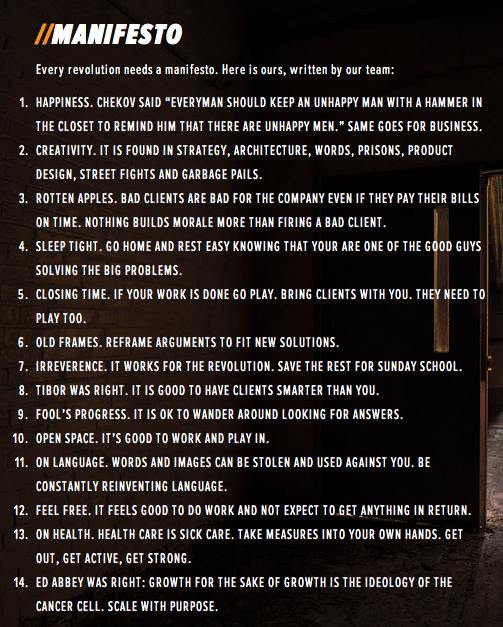
Hope these are of interest/help!
Best,
Dr. Renzi
Thursday, April 3, 2014
Jealousy, Cattiness and Cousins
Alright, I hate to be THAT person, but I just cannot ignore the obvious jealousy and cattiness that Jenny exhibits about Margaret. There were times in the previous chapters that I was concerned that there were hints of something more than just familial feeling from Jenny for Chris, but I definitely am concerned that this book is going to take THAT turn.The way that Jenny describes Margaret and her surroundings is not that of an impartial observer or even that of a family member looking out for her cousin's best interest. The constant focus on Margaret's flaws definitely feels, to me, like that of a jealous fan girl. It's like when your favorite celebrity gets married and you have to point out all of the flaws of the person that they're wedding.
We discussed in class Tuesday the idea that Jenny is an untrustworthy narrator and I have to say that the reading for Thursday just secured that idea for me. She talks several times about how she feels bad about how Margaret lives, but then she doesn't try to alleviate any of the stress that Margaret feels. She doesn't even seem to care all that much about Kitty. She mentions Kitty's disgust and anger, but she does nothing, but continue watching out for and supporting Chris.
So, what do you think?
1. Am I reading too much into Jenny's harsh descriptions and admissions of jealousy?
2. Do you think that Jenny has selfish motivation for allowing Chris to have Margaret beside him? I have this sinking feeling that Jenny would like the beautiful Kitty out of the way, but that's just me.
3. Is Jenny maybe a little too accepting of the situation? Is this because of her own not so innocent affections for Chris?
We discussed in class Tuesday the idea that Jenny is an untrustworthy narrator and I have to say that the reading for Thursday just secured that idea for me. She talks several times about how she feels bad about how Margaret lives, but then she doesn't try to alleviate any of the stress that Margaret feels. She doesn't even seem to care all that much about Kitty. She mentions Kitty's disgust and anger, but she does nothing, but continue watching out for and supporting Chris.
So, what do you think?
1. Am I reading too much into Jenny's harsh descriptions and admissions of jealousy?
2. Do you think that Jenny has selfish motivation for allowing Chris to have Margaret beside him? I have this sinking feeling that Jenny would like the beautiful Kitty out of the way, but that's just me.
3. Is Jenny maybe a little too accepting of the situation? Is this because of her own not so innocent affections for Chris?
Wednesday, April 2, 2014
Why So Jealous?
So before I talk about the reading, I just want to mention that I was going to name this blog "Jealous Much? Part Two" since I already had a blog with the same name for The Proud Man. However, I wasn't sure if that would have made me looked lazy or original so I thought it best for me to tweak it a little bit (and by that I mean change two words). With that being said, today's reading on The Return of the Soldier left me a little confused with the way that Jenny describes the relationship that she and Kitty have with Chris ever since he came back home. Before today's reading, I saw Jenny as someone who was more in control of a given situation. After hearing the news of her cousin's memory loss and learning about his tremendous interest in Margaret, Jenny seemed to react more rationally than Kitty, who was offended and angry with Chris for the lack of interest towards his own wife. While I can understand the difficult position that Kitty is in, I can't help but see Chris as a mere victim of an unfortunate accident. It is not his fault that he can only remember the love that he had for Margaret rather than the one that he had with Kitty and Jenny seems to be aware of that, which is why she treats Chris more sympathetically than Kitty. However, now that Chris and Margaret had had the chance to get together and interact with one another, Jenny confesses her jealousy towards their relationship. She says in chapter five that she is not jealous of their love but "the thought of the things their eyes had rested upon together". I am not quite sure what she means by this but it seems important to know in order to have an accurate portrayal of Jenny as a person and as a narrator. Even though I do trust the things that she says and expresses due to her direct approach towards them, that could possibly change after having a better understanding as to what her jealousy could mean.
Without further ado, these are my questions and thoughts for class:
1.) What do you make of Jenny's jealousy? Is she jealous over the fact that Chris and Margaret have something precious together while she does not or is there more to it, like an issue between social classes?
2.) Do you think Jenny's jealousy has any effect towards her perception towards Chris that is perhaps misguided?
3.) What does Jenny mean when she states in chapter five that by losing his memory and rejecting her and Kitty, Chris was able to gain "something saner than sanity"?
Without further ado, these are my questions and thoughts for class:
1.) What do you make of Jenny's jealousy? Is she jealous over the fact that Chris and Margaret have something precious together while she does not or is there more to it, like an issue between social classes?
2.) Do you think Jenny's jealousy has any effect towards her perception towards Chris that is perhaps misguided?
3.) What does Jenny mean when she states in chapter five that by losing his memory and rejecting her and Kitty, Chris was able to gain "something saner than sanity"?
Monday, March 31, 2014
Appearance vs. Reality
The two women, Kitty and Jenny patiently await the return of their soldier, Chris. However, these women’s hopefulness is shattered by the visit of Mrs. Grey whose lowly appearance makes them doubt the honesty of her announcement of Chris’ sudden illness. Kitty’s anticipated delight in Chris’ return is devastated by his amnesia, causing him to forget she is his wife and to remember his former love Margaret Allington. What makes Kitty’s situation worse is the fact that the destitute messenger, Mrs. Grey is revealed to be the beloved girl from Chris’ past. Instead of happiness, Kitty is met with misery when her husband comes home and treats her as if he has never met her.
I would like to discuss the settings in which the story takes place. The home at Baldry Court is beautifully kept by Kitty and Jenny, so that upon Chris’ return, he may find solace and relief from the pains of war. Jenny explains in the grandeur of her surroundings, “That day its beauty was an affront to me...” (5) because she and Kitty faced the harsh reality, like many women in England during the war, that their spouses, fathers, brothers, and cousins were abroad and confronting dangerous circumstances.
Similarly, the place described by Chris in his recollection of memories with Margaret is very dreamlike and beautiful while the reality is pessimistic and Margaret, the girl he once loved, is now the aptly named and lackluster Mrs. Grey.
1. How does the juxtaposition of the fantasy-like descriptions to the desolate and threatening conditions of war affect the overall understanding of the setting and time of this novel?
Kitty and Jenny are not convinced by Mrs. Grey’s news of Chris’ shell shock; much of their reason behind this is based on her poor appearance, making them believe she is simply a beggar looking for a handout. There is a clear divide between class in this scene. Yet, it is ironic that the woman who is degraded so much by Kitty is the same girl that Chris was one enamored by.
2. By comparing and contrasting Kitty and Margaret, what do you think the author strives to show us? Is the appearance a reality or is it just an illusion?
I find it interesting that Jenny is the narrator of this story rather than the usual, unnamed, omniscient narrator. She is a part of the story because Chris is her cousin and Kitty is her friend, so she must struggle through the pain of reacquainting Chris with his present state of life. Therefore, she is greatly entwined with Chris’ recovery, making our usually objective narrator a subjective character and a key aspect to the novel’s progression.
Wednesday, March 26, 2014
Heart of Darkness
The final section of Proud Man begins with a rather grim tone, to say the least, as it involves a deeply troubled and traumatized individual, Gilbert Hassall. This man has spent a great deal of time in dark places, but after his encounter with the Person, he begins to spend time more frequently in lighter and brighter places. This section has an interesting stance on locale, or place, that I would like to parse out, as I find it to be an important element to this section in particular.
First and foremost, the dichotomy of light and darkness, along with similar opposites, is seen in full here. Gilbert often indicates that he wants to relish in the sunshine; he wishes to be in bright places where he can read classical literature with enthusiasm and feeling (293). Despite his inner desire to be in these cheerful places, where "young" Gilbert was once happy and good, Gilbert has not been able to escape the tendrils of dark places. He refuses to enter or even to look into his mother's room for a number of days, as the dark tree obscures all light from entering. Even after Gilbert removed the tree, and entered the room, he becomes very cold, and wishes to be in the company of the Person (311). Curiously, Gilbert has no difficulty being alone, but not in a cold place like the moon (262-263). Even in his dreams, Gilbert is prone to be exposed to the horrors of his childhood.
I am drawing attention to these specific events for this reason: Gilbert has obviously lived a hard life, having grown up in a broken family. It is especially in childhood when one is most vulnerable to be damaged by traumatic events, and Gilbert certainly had his share of them. As the Person helps him to realize, Gilbert does not fear the darkness simply because it is dark, but because of who might be lurking inside it. It is in his mother's dark room that he observes one of her terrifying "fits", and thus, it is in places of darkness where his painful memory is attached. The Person examines this woman in his earlier dreams, where she has a fluid and terrifying face. It appears that moments of strong feeling and emotion, be they pleasant or horrible, often remain in the place of origin; when Gilbert cuts the throats of innocent little girls, he buries the bodies in their respective places, one of which happens to be a watery pit near a wood, not unlike the bog or swamp that appears in his dreams (271). On the other hand, the locations that Gilbert deeply wishes to be in are appropriate, based on the feelings he derives from what happens there. He finds delight and relief in an orchard near his house, where he connects with Elsie and her kitten. These beautiful places can also be traced in Gilbert's dreams, where he finds himself on the sunny side of a river.
Based on these observations, I will put forth a few questions that will hopefully lead to some healthy discussion.
-Using Gilbert's fascination for the classics, I am able to distinguish between his dark times in Tartarus and his light times in the Elysian Fields. Are there other instances in Proud Man where location drastically changes or somehow affects the characters in the story? If so, what places can you cite and how do they relate to the main figures?
-All three individuals of the story (Andrew, Leonora, and Gilbert) all describe the Person in the same way: as cold, devoid of all feeling, or like a stone, motionless and still. Are these descriptions of the 'human', as opposed to the 'subhuman', in any way, enlightening to you? If you met such a Person in this life, would his/her countenance give you the same impression?
-What do you make of Proud Man's ending? Based on the Person's "analysis" of the dream, did the Person reach a satisfying "conclusion" in his/her "experiment"? It should be noted that the Person himself/herself is in a state of confusion for some time after the dream ended, and even notes that it remains a possibility, albeit a remote one, that the subhuman was indeed the ancestor of the human.
First and foremost, the dichotomy of light and darkness, along with similar opposites, is seen in full here. Gilbert often indicates that he wants to relish in the sunshine; he wishes to be in bright places where he can read classical literature with enthusiasm and feeling (293). Despite his inner desire to be in these cheerful places, where "young" Gilbert was once happy and good, Gilbert has not been able to escape the tendrils of dark places. He refuses to enter or even to look into his mother's room for a number of days, as the dark tree obscures all light from entering. Even after Gilbert removed the tree, and entered the room, he becomes very cold, and wishes to be in the company of the Person (311). Curiously, Gilbert has no difficulty being alone, but not in a cold place like the moon (262-263). Even in his dreams, Gilbert is prone to be exposed to the horrors of his childhood.
I am drawing attention to these specific events for this reason: Gilbert has obviously lived a hard life, having grown up in a broken family. It is especially in childhood when one is most vulnerable to be damaged by traumatic events, and Gilbert certainly had his share of them. As the Person helps him to realize, Gilbert does not fear the darkness simply because it is dark, but because of who might be lurking inside it. It is in his mother's dark room that he observes one of her terrifying "fits", and thus, it is in places of darkness where his painful memory is attached. The Person examines this woman in his earlier dreams, where she has a fluid and terrifying face. It appears that moments of strong feeling and emotion, be they pleasant or horrible, often remain in the place of origin; when Gilbert cuts the throats of innocent little girls, he buries the bodies in their respective places, one of which happens to be a watery pit near a wood, not unlike the bog or swamp that appears in his dreams (271). On the other hand, the locations that Gilbert deeply wishes to be in are appropriate, based on the feelings he derives from what happens there. He finds delight and relief in an orchard near his house, where he connects with Elsie and her kitten. These beautiful places can also be traced in Gilbert's dreams, where he finds himself on the sunny side of a river.
Based on these observations, I will put forth a few questions that will hopefully lead to some healthy discussion.
-Using Gilbert's fascination for the classics, I am able to distinguish between his dark times in Tartarus and his light times in the Elysian Fields. Are there other instances in Proud Man where location drastically changes or somehow affects the characters in the story? If so, what places can you cite and how do they relate to the main figures?
-All three individuals of the story (Andrew, Leonora, and Gilbert) all describe the Person in the same way: as cold, devoid of all feeling, or like a stone, motionless and still. Are these descriptions of the 'human', as opposed to the 'subhuman', in any way, enlightening to you? If you met such a Person in this life, would his/her countenance give you the same impression?
-What do you make of Proud Man's ending? Based on the Person's "analysis" of the dream, did the Person reach a satisfying "conclusion" in his/her "experiment"? It should be noted that the Person himself/herself is in a state of confusion for some time after the dream ended, and even notes that it remains a possibility, albeit a remote one, that the subhuman was indeed the ancestor of the human.
Gilbert, Humbert, and Verona OH MY!
Before I get into the meat of my post I really wish to make a comparison between Gilbert Hassall and Humbert Humbert. These two characters, though their obsessions with young girls are completely different and their texts are obviously different, they have surprisingly similar thoughts on young girls. They both love the innocents of young girls and they both hate the way a girl becomes contorted by the evils of adulthood. Of course for Humbert this love accumulates into a sexual urge, while Gilbert's urge, though he thinks it sexual, accumulates into homicide. There are even more similarities in the characters as they are both literature scholars with impeccable mental capability and their incapability to truly reason through their attraction to their crime. Both characters also have a history of mental instability that they try to ignore and avoid treatment for.
The thing I wish to focus mostly on is the lack of gender complications in relation to the Person in this section of the text. In the previous sections of the book there was always a complication between Verona and their subhuman friend due to Verona's put-on gender. With Andrew the complication came when he fell in love with the "female" Verona, but that love was not reciprocated. This could be seen as not being a gender related issue due to Andrew's knowledge that the Person was in fact genderless, but it becomes a gender problem because Andrew had already associated Verona as a woman and was inclined to think if them as such, even though a strange woman Verona made. With Leonora there was attraction to Verona's gender first and the rest of the Person later. If Verona had been masked as a man there would have been no interaction between the two of them that could have lead to a friendship due to Leonora's issues with gender. For Gilbert, it isn't until after Verona engages with him and Gilbert has agreed to sit with Verona that we discover his aversion to women. Gilbert doesn't even look at Verona until he's already been drug in by the other's personality.
After Gilbert discovers Verona is not actually human, which is pretty quick into their interactions, there is no question of "his" gender. It never comes up. Gilbert's aversion to women is the meat and potatoes of the chapter, but Verona's gender is never questioned. Gilbert even mentions how his house keeper thinks that they're homosexuals, but Verona never mentions gender. This feels like such an unusual chapter because of this.
Questions:
Do you think that the lack of focus on the gender of Verona changes the feel of this chapter?
Do you think that Gilbert has actually changed due to Verona's interference or that he just merely gives up in the end?
Do you think that Verona's gender would have changed how Gilbert and the Person interacted initially?
The thing I wish to focus mostly on is the lack of gender complications in relation to the Person in this section of the text. In the previous sections of the book there was always a complication between Verona and their subhuman friend due to Verona's put-on gender. With Andrew the complication came when he fell in love with the "female" Verona, but that love was not reciprocated. This could be seen as not being a gender related issue due to Andrew's knowledge that the Person was in fact genderless, but it becomes a gender problem because Andrew had already associated Verona as a woman and was inclined to think if them as such, even though a strange woman Verona made. With Leonora there was attraction to Verona's gender first and the rest of the Person later. If Verona had been masked as a man there would have been no interaction between the two of them that could have lead to a friendship due to Leonora's issues with gender. For Gilbert, it isn't until after Verona engages with him and Gilbert has agreed to sit with Verona that we discover his aversion to women. Gilbert doesn't even look at Verona until he's already been drug in by the other's personality.
After Gilbert discovers Verona is not actually human, which is pretty quick into their interactions, there is no question of "his" gender. It never comes up. Gilbert's aversion to women is the meat and potatoes of the chapter, but Verona's gender is never questioned. Gilbert even mentions how his house keeper thinks that they're homosexuals, but Verona never mentions gender. This feels like such an unusual chapter because of this.
Questions:
Do you think that the lack of focus on the gender of Verona changes the feel of this chapter?
Do you think that Gilbert has actually changed due to Verona's interference or that he just merely gives up in the end?
Do you think that Verona's gender would have changed how Gilbert and the Person interacted initially?
Monday, March 24, 2014
Men are from Mars, Women from Venus, and Persons are from the future
So for my post this week I am sort of thinking about some of
the things that we brought up in class during the last session, especially in
regards to the ideas of masculinity and femininity, as well as male and female,
that continue to be brought up within the text and I apologize now for the
rambling that is about to take place as I try to get my thoughts out.
In class we started to touch on the feminine and the
masculine, or rather gender, as being separate from sex, the male or the female,
or the biological differences that exist. In the eyes of the Person, and in the
theory that is seemingly posited by the text, gender or rather masculinity and
femininity, seems to have arisen as a result of the biological differences, and
the inferiority felt by men as they are not the ones that are able to produce
life, and in the early section of the text, the Person states that as a result
of this men placed themselves in a position of superiority becoming the
dominants within society, “males in the beginning had every reason to seize
power, while the females, deeply content with their biological importance, had
none” (28). Leonora describes these as being artificial differences between the
two sexes, that have been created and are therefore hindering a true
development that could occur between men and women.
I also found the section in which Leonora and the Person
discuss love and finding love, as well as its shift into talking about art to
be fairly interesting as well. Leonora gives, what seems to me, a fairly modern
version of love, if you can call it modern, but more in the sense that it seems
to be an idealized version of love that she has separated from the elements of
masculinity and femininity, where the expectations are not on them to act “masculine
or feminine”, which is interesting to think about in today’s world as to
whether or not this has been truly achieved even in our time, (of course this
is in thinking as a subhuman rather than as a person within the text, in which
these things do not matter). However, the move into the discussion of art or
work struck me as to the tasks that men and women were assigned by Leonora, “Men
would be the inspirers, the initiators, the inventors, women would be the
interpreters, the adapters, the moulders, the ones who carry out” (177). The
Person then goes on to respond that this is then different from how it works
now in regards to art, where women are the inspiration for men and then uses
the term fertilizes in regards to women, who have been the inspiration for men,
as she says, across generations. Men here take on a feminine role, being the
ones who have been fertilized rather than the ones fertilizing and Leonora
complains that this is not natural and therefore should be different, which
ties it back into the idea of sex rather than gender, as in her eyes women
should always hold the responsibility of being the ones fertilized rather than
the other way around.
However, back to the idea of reading the two chapters of the
text differently, I feel that it is these ideas that have influenced the
reading and that despite Leonora’s opposition to masculinity and femininity, it
is not yet something that has been drained from culture as she wants it to be,
because although she is not feminine in some aspects she is still in others as
a part of what subhuman society dictates, as is Andrew when it comes to the
masculine.
Discussion Questions:
1. These ideas being raised by Leonora certainly
seem to come from an early feminist perspective, as they wish for a sort of
equality between men and women, as she wants her and her husband to work together
as a “unit”. However there is the question as to whether or not this equality
can be achieved as she sees it, and do we see it as being possible, as both the
subhumans we are living in a more modern world, or as fellow Persons, as
Alethea suggests we must then be devoid of the idea of importance? And is
importance something we can rid humanity of? This seems to be one of many of
the big questions and whatnot that the text is asking rhetorically.
2. I think it is interesting the ideas that both Leonora and Alethea put forth on the production of art in subhuman society or rather the roles that she feels that men and women would take on in her more idealized world where men and women can live and work together, and I was wondering what do you think of the roles that she gives to each? Do any in your mind seem to fit with either sex, or is that idea just a product of thinking in relation to gender? Why are men still the inventors, and women become interpreters? Why then are there still distinctions between what each can or should do? (Also as a side note it was really strange to see Alethea's wording and think of the idea of Helen of Troy as a fertilizer to many men across generations rather than just a muse or an inspiration. But it showed that even things such as these that one does not normally think of are still influenced by gender codes.)
3. For my last question, I found it weird that after all of this discussion that takes place, that Leonora then goes on to marry James Grey. How then do you take it that she sacrifices her own ideals and beliefs for love? Did you expect her to not marry him? Does it change anything about her character that she did?
Wednesday, March 19, 2014
Fatal Attraction
In Part III of Burdekin's Proud Man, we are able to see Verona/Alethea's second major interaction with a character; her encounter with Leonora offers an alternative worldview than that of Andrew. Even though Verona still maintains the "cold" but "gentle" personality, the reader is able to draw more insights from her way of thinking, her own "island", and her apparent inability to feel any emotion at all. I will try to advance the class dialogue using some of the observations I have made, and hopefully they will be useful ones.
We learn that Leonora has had a difficult past, having lost a daughter, Cordy. She has also struggled with having a book published, which has eroded her self-confidence as a writer (181). This pains her tremendously upon reflection, but at other times, Leonora is very cheerful and content when she is with Alethea. Interestingly, Leonora is described as two people in one (173), and this arrangement of two is seen elsewhere in the chapter, particularly of both men and women. Leonora makes clear to Verona that maleness and femaleness are themselves opposites, but they are NOT synonymous with masculinity and femininity. The latter two seem to be more outward projections, like one 'Leonora', while the former two seem to be more inward, like the other 'Leonora'.
At a social scene, Verona is also the center of attention, particularly toward the male figures. Her two encounters with Fernie and Mitchell are uncomfortable for both men, but Verona has a curious tendency to act as a sort of mirror. This is especially seen in the case of Philip Mitchell, who, acting initially as the dominant figure, leaves the party bewildered and frightened (206-7). Ironically, the Proud Man has lost his pride from one encounter with Verona. All of his fame, power and prestige cannot save him from realizing that he is very fragile; he seems to have been too confident in his prowess as an artist, and discovers that perhaps all his pursuits have been in vain.
Using some of the above information, I will try to put forth a few thought-provoking questions...
1] Verona seems to bring out the weakest or most vulnerable aspects of everyone she meets. Apparently, her cold, almost Spock-like personality is impervious to the entire spectrum of human emotion, leaving others feeling afraid, both of Verona and of their own shortcomings. Is it "human" (or in this case, subhuman) for us, as human beings, to feel natural emotions like love, anger, sorrow, fear, and countless others? Or, does being human imply only a logical, or somehow more rational approach to life, as Verona shows?
2] What, in your own words, does it mean to be "male" or "female"? What does it mean to be "masculine" or "feminine"? This question is raised frequently throughout the book, but perhaps only Verona knows the answer for sure. Are we, as either males or females, capable of understanding the opposite sex's viewpoints entirely? In other words, do you agree more with Leonora, who claims that one sex may understand how other members of that sex think, but not how the opposite sex thinks? (174) Or, do you side more with Verona/Alethea, who maintains that both male and female are at fault when it comes to understanding one another? (212)
3] In the same page number just mentioned above (212), Alethea also makes mention of "getting over the importance idea". What does this mean? Being a man is, for the male, both the source of his greatest pride and his greatest unhappiness, according to Alethea. Do you agree?
-Brandon Gerlinger
Wednesday, March 12, 2014
Jealous Much?
So many insightful ideas were expressed in the first chapter of Katherine Burdekin's Proud Man. For starters, the idea of having a gender neutral narrator from the future that interacts with their possible ancestors, the subhumans, in a dream really perplexed me at first. However, as I began to look over the reading, I began to understand the importance of it, being that the narrator would be able to understand to lifestyle of both sexes a lot better. This, therefore, makes me trust the narrator more when he or she begins to talk about topics such as war, sexism, and the jealousy that comes from it. However, I still had issues in agreeing with what the narrator was saying. One of the things that grabbed my attention was when the narrator stated that men where jealous of women's biological importance when it came to making children (thus making them feel inferior and envious) and both genders cannot live together in peace since they hate and fear each other but at the same cannot live without the other due to having strong animal desires, which is sex. This claim regarding men and women not being able to live in peace because of their loathing one another seemed too extreme for me and can't seem to understand the reason for making that claim. Another thing along the lines of this that I had difficulty comprehending was the claim that war was the best method for relieving "...restlessness caused by the unnatural misery of their sex lives" (26). This struggle of inferiority that is expressed both between the males and females then leads to the dramatic ending of the chapter, where the narrator expresses the temptation to say that subhumans spend most of their time "In hating." (62). Perhaps since I see myself as a hopeful and optimistic person I was not able to digest the negativity and the lacking of a solution towards the problems mentioned throughout the chapter.
Some of the questions that I had throughout the reading include:
1.) What do you all think of the opinion regarding the struggle of men and women living peacefully? Has there been any kind of significant change that can argue against this or are we still dealing with the same issues today?
2.) What kind of significance do you see in having the narrator interact with the subhumans in a dream? Based on our discussions in class about having one's dreams differed, does this text seem to carry the similar idea of reaching towards something that can't be reached?
3.) Do you agree with the idea that art, religion, and war are the best methods in escaping the jealousy and tension between men and women?
Some of the questions that I had throughout the reading include:
1.) What do you all think of the opinion regarding the struggle of men and women living peacefully? Has there been any kind of significant change that can argue against this or are we still dealing with the same issues today?
2.) What kind of significance do you see in having the narrator interact with the subhumans in a dream? Based on our discussions in class about having one's dreams differed, does this text seem to carry the similar idea of reaching towards something that can't be reached?
3.) Do you agree with the idea that art, religion, and war are the best methods in escaping the jealousy and tension between men and women?
Subhuman Circumstances?
The first chapter of Proud Man was heavy for it gave great detail of the troubles conflicting England in the 1930’s. “The Person” is narrated by a hermaphrodite, The Genuine Person, visiting or dreaming of England’s past. There they (I guess that’s a proper pronoun for a hermaphrodite) describes the prevalent classism, racism, and sexism of the time. The critical focus is the inequality of men and women based on chauvinistic practices and the apparent, blind religious devotion of the subhuman characters.
The narrator explains that males invented their dominating power when they became conscious of their lesser part in sexual reproduction, because of “...a deep rooted jealousy of the female’s greater biological importance” (24). If men and women are equals, why does the author attempt to make the reality of women better/dominating to men? Is this her attempt?
Being a religious person, I was struck by the controversial notions raised by Burdekin and found it hard to reconcile her words with my understanding of Christianity and Catholicism. It made this a complicated read for me to say the least. I am not sure if anyone else felt this way, but we are at a Jesuit, Catholic university, after all, so I thought I would ask, how this chapter, based on your religious or non-religious/philosophical outlook, struck you? I’m hoping someone might help me contend with this work in a more agreeable way!
The men and women of England are referred to as subhuman to signal their state of half-consciousness. The Genuine Person also points out the intellectual and rational gap between the subhumans of the past and of the humans who are contemporaries of them (again, the hermaphroditic pronoun).
We discussed the difference and meanings of what it is to act like a human as opposed to an animal concerning the blurred human and inhuman behavior of Yank in the Hairy Ape. We often hear about the great intelligence of animals as equal to that of young children, for example, the chimp’s ability to make tools, a faculty that was thought to be exclusively human. In Proud Man, the Genuine Person considers these subhumans to be worse than animals. They also explain that, “One of the major differences between subhumans and human beings, besides the difference between a half-conscious being with a split mind, and a fully conscious being with a whole mind, and perhaps arising out of that difference, is caused by the subhuman idea of privilege” (17). Clearly, our narrator sees nothing special about human beings and that the subhumans were sorely mistaken to believe in their privilege. This leads me to ask, what do you believe differentiates human beings from animals?
Monday, March 10, 2014
Tinkin' is hard
The Russian
formalist Viktor Shlovsky writes that “the technique of art is to make objects ‘unfamiliar’”:
through strategic “roughening” of language or distortion of forms, the artist
creates an object that forces us to confront it afresh: we are removed from the
“automatism” of perception that dominates our daily lives.
Shkovsky’s
distrust of automation, like O’Neill’s, is partly a response to historical realities. On the assembly line, men almost literally
become “cogs in a machine.” The progressive dream would have these cogs “wake
up” and “bust trou” the cages that gird them. But if The Hairy Ape is an
evocative record of what can happen when one of those “cogs” struggles to
self-consciousness, which one of us might not, if even for a cowardly instant,
prefer a state of blissful nescience? “Drink, don’t think”: sound advice, if
ignoble? “Tinkin’ and dreamin’, what’ll that get yuh?” By the end of O’Neill’s
play, what indeed? What if the “defamiliarized” object remains permanently
estranged?
“Wandering between two worlds, one dead / The other powerless to be
born, / With nowhere yet to rest my head, / With these, on earth, I wait
forlorn”: one waits, alongside Paddy, as an anachronistic token of discarded
meanings: or stumbles, alongside Yank, toward a violent defeat. Many people –
according to Yank, the hairy ape itself – can draw upon alternative communities
past or to come as a source of solace in an otherwise unlivable present (the
past inflection we call a golden age, the future a utopia). But Yank “ain’t got
no past to tink in, nor nothin’ dat’s comin’, on’y what’s now – and dat don’t
belong.” Paddy’s golden age is the “right dope”: Yank “[gets] it aw right,” but
he can’t “get in it.” Yank can’t “get
in” Long’s worker’s utopia, either. This distinction between “getting it” and “getting
in it” ought to serve as a
discouragement (or challenge?) to self-help gurus everywhere: one might very
well see the promised land and yet be incapable of entering it. A person can
truly measure the worth of an ideal without being able to participate in it. A
golden age – or utopia – so perceived only exacerbates the perceiver’s anguish.
“Tinkin’ is hard”: “Tis only thinking / Lays lads underground.” Why bother?
Is this a
purely cynical play? Should we join the chorus and blow a raspberry at a list
of powerless pieties that includes self-reflection itself? Here’s a list of
terms that gain a “brazen metallic quality” as though they’d been passed
through a “phonograph horn” (that is, a list of consoling abstractions “made
strange,” somehow, inhuman: incapable of solving a dilemma): think; love; law;
government; God. From the prisoners in Scene VII, the “glorious Constitution of
these United States” draws “a perfect storm of hisses, catcalls, boos, and hard
laughter.” Democracy’s given “the boid.”
If, as one critic claims, Yank himself
is an “Everyman made strange,” then his choral compatriots, be they shipmates or
jailmates, merge into an ominous presence that speaks almost entirely in
mockeries. Perhaps it’s this “tone of mockery” itself that incites the ape’s
rage and brings about Yank’s death. Even with crushed ribs, Yank is alienated
enough turn his own situation into the “comedy” promised by the play’s subtitle:
he jokes about kisses and about Zybszko; he stands apart from himself and
displays his own crushed body to us, the audience, as if he were a carnival barker. Yank’s final gesture is an
impersonation that mocks itself: the self is an object become permanently
estranged. Are we, as an audience, supposed to have woken up from something?
Wednesday, February 26, 2014
The Harry Ape Man
O' Neill's The Harry Ape, takes place in "the firemen's forecastle of an ocean liner". The scene opens an hour after they finished sailing from New York and are all consuming alcohol. It is obvious to see that they are all drunk due to them constantly yelling at one another and the random singing that takes place throughout the scene. One of these man, however, stands out from the rest. This man, named Yank, is best described as the leader of these men since everybody would quiet down whenever he spoke and respected him. The introduction described him as "broader, fiercer, more truculent, more powerful, more sure of himself than the rest". Yank definitely showed leadership roles during the play by ordering and demanding the men to work in powering the ship's engine with coal, which happens later on. At this particular scene though, another man named Paddy mentions how in the past the ships used sails instead of physical labor (which is what they do) in order to travel. He goes on the say that he found that to be more liberating, whereas now he feels imprisoned and "caged in by steel from a sight of the sky like the bloody apes in the Zoo!" This makes Yank furious for a moment and he then declares that Paddy doesn't belong because he is too old. He then adds on to say that he himself belongs ("a part of the engine") and is alive while Paddy doesn't. The concept of belonging is mentioned throughout the play as well.
One of the things that makes me curious is that the play continues to make references to caged animals in the zoo. More particularly, Yank is later refereed to as a "filthy beast" by Mildred, who is introduced in the second scene as this twenty year old lady who gained access in seeing the men (which she addressed as "the other half") work. The fact that these men have so far been seen as heavy and being very aggressive and barbaric does seem to resemble some sort of animalistic behavior. Paddy's comment about feeling like a trapped ape in the zoo also adds on to this. Could this have some sort of connection with the idea of belonging and that they are perhaps seeking to be a part of something greater instead of feeling trapped?
On another note, I am not quite sure what to make of Mildred's character. We are told that she had done social service work, studied sociology in college and that she is interested in learning about how the "other half lives". Even though this might make her look as an educated person who cares about understand and helping people, her personality doesn't seem to justify that. One moment in particular would be when the second engineer asks her if she was going to wear her white dress during her visit to the stokehole. Not only did she refuse to change out of it, but she said she would throw her dress into the ocean after leaving from the stokehole since she has fifty dresses just like it. This show a lack of humility, which gives me a bad impression of her. Still, I'm not sure if I'm supposed to for some reason.
So here are the questions that I want to discuss in class:
1.) Why is "being part of an engine" and the concept of belonging brought up throughout the play?
2.) What does the animalistic references seen with the men imply? Does it have anything to do with their struggle with the idea of belonging? Are they the only ones that they see as animals?
3.) What is your understanding of Mildred's character? Is she meant to be seen as a good person (white and pure as the dress that she wore) or vile ("a natural born ghoul")?
One of the things that makes me curious is that the play continues to make references to caged animals in the zoo. More particularly, Yank is later refereed to as a "filthy beast" by Mildred, who is introduced in the second scene as this twenty year old lady who gained access in seeing the men (which she addressed as "the other half") work. The fact that these men have so far been seen as heavy and being very aggressive and barbaric does seem to resemble some sort of animalistic behavior. Paddy's comment about feeling like a trapped ape in the zoo also adds on to this. Could this have some sort of connection with the idea of belonging and that they are perhaps seeking to be a part of something greater instead of feeling trapped?
On another note, I am not quite sure what to make of Mildred's character. We are told that she had done social service work, studied sociology in college and that she is interested in learning about how the "other half lives". Even though this might make her look as an educated person who cares about understand and helping people, her personality doesn't seem to justify that. One moment in particular would be when the second engineer asks her if she was going to wear her white dress during her visit to the stokehole. Not only did she refuse to change out of it, but she said she would throw her dress into the ocean after leaving from the stokehole since she has fifty dresses just like it. This show a lack of humility, which gives me a bad impression of her. Still, I'm not sure if I'm supposed to for some reason.
So here are the questions that I want to discuss in class:
1.) Why is "being part of an engine" and the concept of belonging brought up throughout the play?
2.) What does the animalistic references seen with the men imply? Does it have anything to do with their struggle with the idea of belonging? Are they the only ones that they see as animals?
3.) What is your understanding of Mildred's character? Is she meant to be seen as a good person (white and pure as the dress that she wore) or vile ("a natural born ghoul")?
Twenty-Five Knots a Hour!: The “Hands” of the Ship’s Heart Machine
“The treatment of this scene, or of any other scene in the play, should
by no means be naturalistic”. Even from the very outset of the play, readers
and viewers are given the direction that there is to be nothing natural in this
play, as mechanization and industry reign supreme, and what interested me is
just how deep this idea or theme runs, especially in the first four scenes. The
obvious, of course, points to the men working beneath the ship, who are
described, despite of slight individual differences, as being all alike, who
constantly speak in unison outside of the warring voices of Paddy and Yank, the
similar cogs in a giant machine that shovel coal and get the ship moving “Twenty-five
knots a hour!”, something that Yank takes pride in as he feels as if this them
makes him something in this world in which he lives, “I’m de end! I’m de start!
I star somep’n and de woild moves! It - dat’s me!”, a force that keeps the
world clipping along. And even in the early stage directions Yank is described
as “the very last word in what they are,
their most highly developed individual”, which struck me as strange as not
only were the men early described as the perfect images of early Neanderthals, making
him the best of early evolution, but more so in the sense that this idea of
development comes from the fact that Yank is just the best piece of the machine.
There is also the character of Mildred, who in a very different way, falls into this category of the unnatural, despite being completely different from the men below deck. Calling herself a “waste product of the Bessemer process”, as well as being called a “poser” by her aunt, Mildred seems to be an unnatural creation in an already unnatural world, who then keeps recreating herself, or posing differently, in order to find her place in this world where she clearly does not belong or rather does not know how to belong, something emphasized by her choice to continue to wear white despite going down into a furnace. And there is an unnaturalness about the white she wears as well, as Yank swears he sees a ghost, rather than the normal associations one would get about a woman in white, the pureness or innocence, but rather she becomes frightening to him and gets him “tinkin” about setting out to prove that he is more than a “hairy ape” and almost needing to convince himself in his tirade that this is the case.
This then leads me to my discussion questions:

Is the natural possible in this mechanized world? Or the natural
as we know it to be? Clearly O’Neill is bringing up this idea in these scenes
and may have more to say on this as the play continues, but there is the idea I
see sort of floating around that this is the new natural. What does
that then mean for mankind in this world, as well as in the world outside of
the play, if this is the “new” natural?
How is one supposed to deal with these changes or how are they to be viewed? Sort
of goes back to the discussion on the fears of modernism or of the modern age that
we brought up in class the other day. Of course this may not be an answerable
question entirely, but it is something that could be interesting to think about.
Also, I found the continued image of Rodin's The Thinker, (Fun fact: the first cast of the original statue is pretty close to Cincinnati, its outside of Grawmeyer Hall at the University of Louisville) to be interesting in these first few scenes and the fact that Yank constantly is "tinkin" but all that he really comes up with is more to do with his job and his being a part of the ship than any "real" thoughts outside of this. So there is the question of whether or not there is room for "tinkin" in this world, or do people need to think or should they just function?
But I mean Moloch though? Anyone else think of this when Yank is talking about throwing Mildred into the furnace to help the ship continue to run? Metropolis was completely running through my brain throughout reading this text and I think the two are definitely a part of the same modern conversation as they are only 5 years apart, except I have yet to see a heart come in that can connect hands and head.
"Cold Pork Pudding..."?
The Hairy Ape has a wonderful and diverse group of characters. For instance, Mildred and her aunt, their dynamics are fascinating but what makes them even more interesting is their polar opposites they represent. Mildred is thin, dream oriented, young, and fragile. While her aunt is chunky, realistic, old, stout, and pretentious. Their interactions with each other present a insight to what is happening with the other crew members. These women from their social classes present the more humanistic aspect of people and society while the men who work on the boat represent the animalistic qualities that are often diminished or looked down upon by society. The dynamics of the crew is fascinating against Mildred and her aunt's personality but when compared to each other the men seem to be one in the same. They are all rough around the edges, drinking, and swearing.
Here are some questions to ponder:
1. What are your thoughts about Yank? Is he in love or is he in hate? Is there a fine line? Where in the text does it show he loves/hates her?
2. Analyze the relationship between Mildred and her Aunt. Is there a polar opposite in these two or is Mildred a younger version of her aunt? Will she become her aunt later in the story?
3. Language is a huge influence in these first couple scenes. Analyze what "cold pork pudding against a background of linoleum" truly means.
Here are some questions to ponder:
1. What are your thoughts about Yank? Is he in love or is he in hate? Is there a fine line? Where in the text does it show he loves/hates her?
2. Analyze the relationship between Mildred and her Aunt. Is there a polar opposite in these two or is Mildred a younger version of her aunt? Will she become her aunt later in the story?
3. Language is a huge influence in these first couple scenes. Analyze what "cold pork pudding against a background of linoleum" truly means.
Monday, February 24, 2014
Good Morning Daddy!
Throughout the collection of Montage of a Dream Deferred we see three poems that seem to take place as a rather one sided conversation between father and son. Each poem begins with "Good morning daddy!" as the son greets his father and begins the poem. The three poems in question are "Dream Boogie", "Good Morning", and "Island".
We discussed the first poem in class, but I wanted to revisit it briefly as it is part of this narrative. In "Dream Boogie" we get a feel for the musical tones that are spread throughout the poems in the book, but we also get the beginning of a conversation between two very distinct generations of Harlem natives. The main speaker is obviously a younger man, growing up in Harlem during the 1940's and 50's who has a connection to the growing Jazz and Blues influence of the time as well as the idea of "a dream deferred". The second speaker, italics, is the father or older man in question. The father in the poem seems to be less concerned with the "dream" than the son as he asks if the beat is happy and ignores the son trying to explain or feel the undertones of depression and hardship. The son, being respectful, moves on without much prompting. To me this poem shows the difference in generational thinking on how to get your dreams recognized when you are the one being deferred. The father, being older, is stuck in the do-what-they-so-and-eventually-it-will-come mindset similar to Booker T. Washington, while the son seems to be more interested in how to get what he needs for his dream now.
The second poem "Good Morning" gives us a wider view of the father's life. We get to see that he is old enough to have seen the large migration of African Americans that took place in 1904 due to tough economic and real estate situations for the black population. Because of his age the father has been able to see his neighborhood turn from new to run down and he is beginning to realize that there might be something to what the son was saying about "the dream deferred" in "Dream Boogie". We see, through the son's retelling, that the father knew that the situation for these new arrivals. and even those already living there, was becoming more and more dire, but now the older generation is opening its eyes to what the younger generation has been saying throughout the poem collection. In this poem we get to see the father ask the son a question that many would think that a younger would ask of an older for advice on, "What happens/ to a dread deferred?" (26-7). We do not get to see the son's full explanation, but we do see that the son has been at least following the poems in the collection because he has heard and understands what happens to a dream deferred, while the father is just now opening his eyes.
The final poem that fits into this trio is "Island". We see this poem ending in the same way that the others began. We do not begin with this conversation, or the son trying to get his father to understand, but instead we see the son having his own reflection on Harlem and their situation. The son does not seem to have a bad connotation of his town, even if his dream has been deferred, he still finds things to be not too overbearingly awful and seems to have hope for Harlem at least. Here we see the father speaking about the dream deferred and the son answers him, almost as though the son was in a daze as the father walked into the room speaking.
And that leads me to my discussion questions:
Q. What do you think the father means when he says, "Dream within a dream,/ Our dream deferred." Do you think this speaks to his own dream being that of his son's, but in a different voice, which has also been deferred or is there something else behind it?
Q. Do you think that these poems are connected in the way I have connected them? Is there a conversation about the generation gap and the conflict resolution tactics of each?
Q. Do these poems make you feel as though the narrator is witnessing or reading the other poems of the book and trying to get his father to open his eyes to them?
We discussed the first poem in class, but I wanted to revisit it briefly as it is part of this narrative. In "Dream Boogie" we get a feel for the musical tones that are spread throughout the poems in the book, but we also get the beginning of a conversation between two very distinct generations of Harlem natives. The main speaker is obviously a younger man, growing up in Harlem during the 1940's and 50's who has a connection to the growing Jazz and Blues influence of the time as well as the idea of "a dream deferred". The second speaker, italics, is the father or older man in question. The father in the poem seems to be less concerned with the "dream" than the son as he asks if the beat is happy and ignores the son trying to explain or feel the undertones of depression and hardship. The son, being respectful, moves on without much prompting. To me this poem shows the difference in generational thinking on how to get your dreams recognized when you are the one being deferred. The father, being older, is stuck in the do-what-they-so-and-eventually-it-will-come mindset similar to Booker T. Washington, while the son seems to be more interested in how to get what he needs for his dream now.
The second poem "Good Morning" gives us a wider view of the father's life. We get to see that he is old enough to have seen the large migration of African Americans that took place in 1904 due to tough economic and real estate situations for the black population. Because of his age the father has been able to see his neighborhood turn from new to run down and he is beginning to realize that there might be something to what the son was saying about "the dream deferred" in "Dream Boogie". We see, through the son's retelling, that the father knew that the situation for these new arrivals. and even those already living there, was becoming more and more dire, but now the older generation is opening its eyes to what the younger generation has been saying throughout the poem collection. In this poem we get to see the father ask the son a question that many would think that a younger would ask of an older for advice on, "What happens/ to a dread deferred?" (26-7). We do not get to see the son's full explanation, but we do see that the son has been at least following the poems in the collection because he has heard and understands what happens to a dream deferred, while the father is just now opening his eyes.
The final poem that fits into this trio is "Island". We see this poem ending in the same way that the others began. We do not begin with this conversation, or the son trying to get his father to understand, but instead we see the son having his own reflection on Harlem and their situation. The son does not seem to have a bad connotation of his town, even if his dream has been deferred, he still finds things to be not too overbearingly awful and seems to have hope for Harlem at least. Here we see the father speaking about the dream deferred and the son answers him, almost as though the son was in a daze as the father walked into the room speaking.
And that leads me to my discussion questions:
Q. What do you think the father means when he says, "Dream within a dream,/ Our dream deferred." Do you think this speaks to his own dream being that of his son's, but in a different voice, which has also been deferred or is there something else behind it?
Q. Do you think that these poems are connected in the way I have connected them? Is there a conversation about the generation gap and the conflict resolution tactics of each?
Q. Do these poems make you feel as though the narrator is witnessing or reading the other poems of the book and trying to get his father to open his eyes to them?
Personifying "Harlem"
To me, "Harlem" is a critique of the dream deferred and what happens to the people dealing with deferred dreams. The speaker is looking at all of the people who have had to put their lives on hold for extraneous circumstances and suggests various reactions the people may have.
The poem opens with "What happens to a dream deferred?" Although he addresses the dream itself, I think he is actually talking about the people who dreamt these dreams.
He goes on, saying "Does it dry up/ like a raisin in the sun?" This line was the inspiration for Lorraine Hansberry's play entitled "A Raisin in the Sun," but it doesn't mean much for us today, although the play was the first play written by a black woman and produced on broadway and was considered the best play of 1959 by New York Drama Critics' Circle (Wikipedia, sorry).
The line suggests that when a person's dream is deferred, they tend to stay where they are and have all of their energy and will sucked out of them, leaving them dried up and basically useless (I'm not a huge fan of raisins, if you can't tell).
The next line, "Or fester like a sore-/And then run?" implies one of two things: first, the person may build up potential energy and ideas and then let them loose, similar to a blister bursting (gross, I know) or they could let all of their frustration and anxiety build up until they run away from everything they know.
I'm not sure what the next line, "Does it stink like rotten meat" means besides the obvious, sitting there until the person rots or dies, but it could imply something far different. Does anyone have suggestions?
"Or crust and sugar over-/Like a syrupy sweet?" (This line and the "bacon bowl" infomercial I just heard on my roommate's tv are making me go get french toast at IHOP after I post this. I'm not lying.) The speaker could be implying that the person could get so used to their dream being deferred that they grow comfortable with where they are and see it as sweet- as if their alternative isn't as good as what they have here. They could use it as justification for staying in one place or being comfortable with their dreams being deferred. It's not what they want, but it's sweet enough to stay.
"Maybe it just sags/ like a heavy load." The idea that he or she has barriers, physical or mental, that prevent him or her from achieving his or her goal is so heavy, the person bears the weight for the remaining of his or her days. This is an incredibly sad ending to this poem, and makes me realize that I definitely have things in my life that I've wanted to do but I've put them on hold for a while. I hope I can speak for everyone when I say that this is part of the human experience- an unfortunate one, but one that pulls us together nonetheless.
"Or does it explode?" The speaker could be using "explode" in a multitude of ways here, and I'm choosing to read it as an explosion of emotion, similar to "fester like a sore/And then run" as stated previously. The person could be so fed up with what they have to go through that they could revolt against everything and run from their current responsibilities.
Although a lot of Hughes' book/poetry has to do with African Americans and the culture in Harlem, I think he is so relatable because everyone, no matter your race, ethnicity, class, age, etc. has had a dream deferred.
Do you, as a reader, think that Hughes relates to the average person and not just a certain demographic? Are there any other examples in the text that show us this relationship with the reader? Do you think his poetry comes to a distinct conclusion, or is something left up in the air after you are done reading?
I personally don't think the speaker in "Harlem" is giving a solution to deferred dreams, but rather is illuminating different ways people deal with their lives. Do you think Hughes suggests a way to deal with deferred dreams throughout his poetry? Or do we never really know?
Thanks guys. I'll try to enjoy my french toast and I'll see you all at one tomorrow.
Subscribe to:
Posts (Atom)